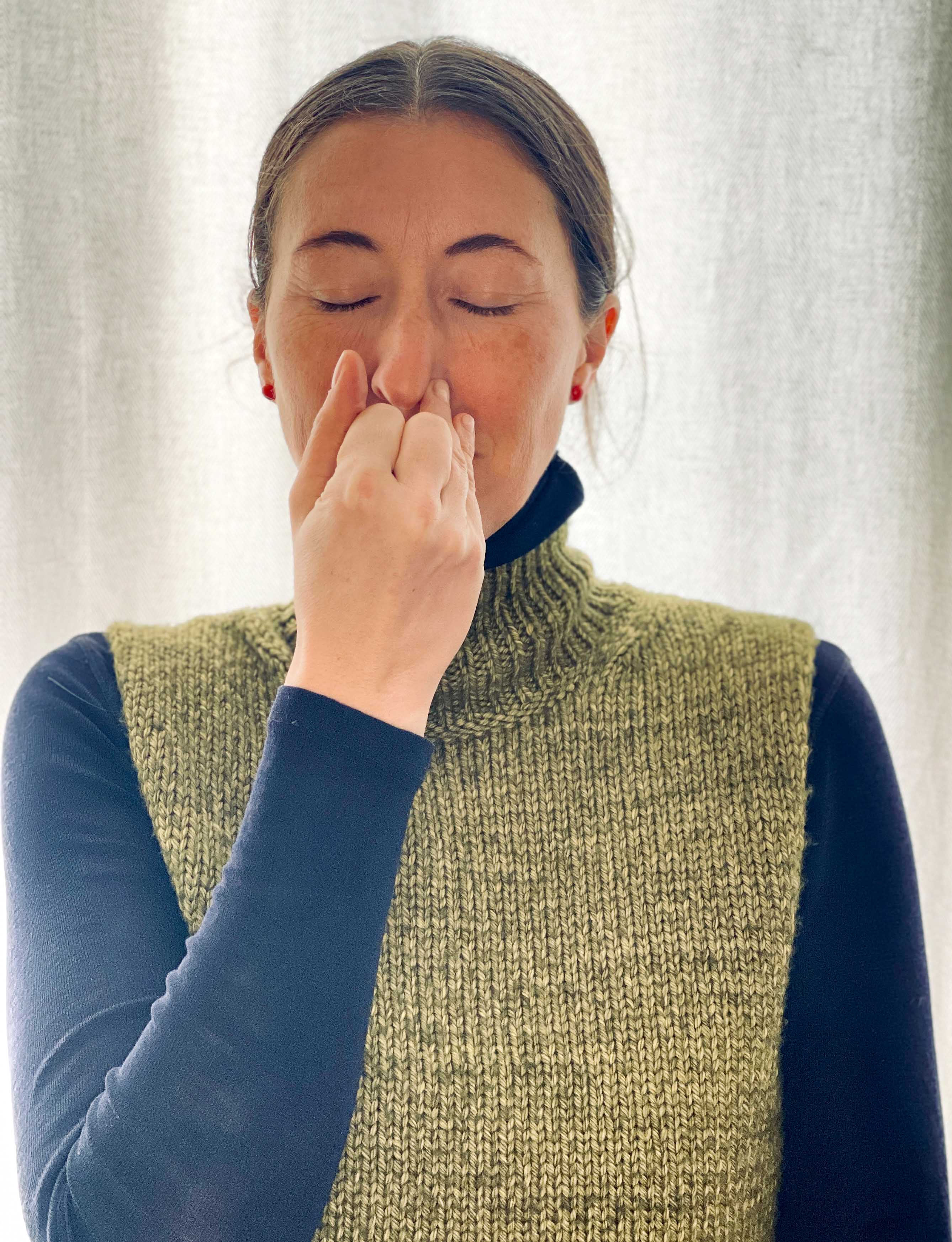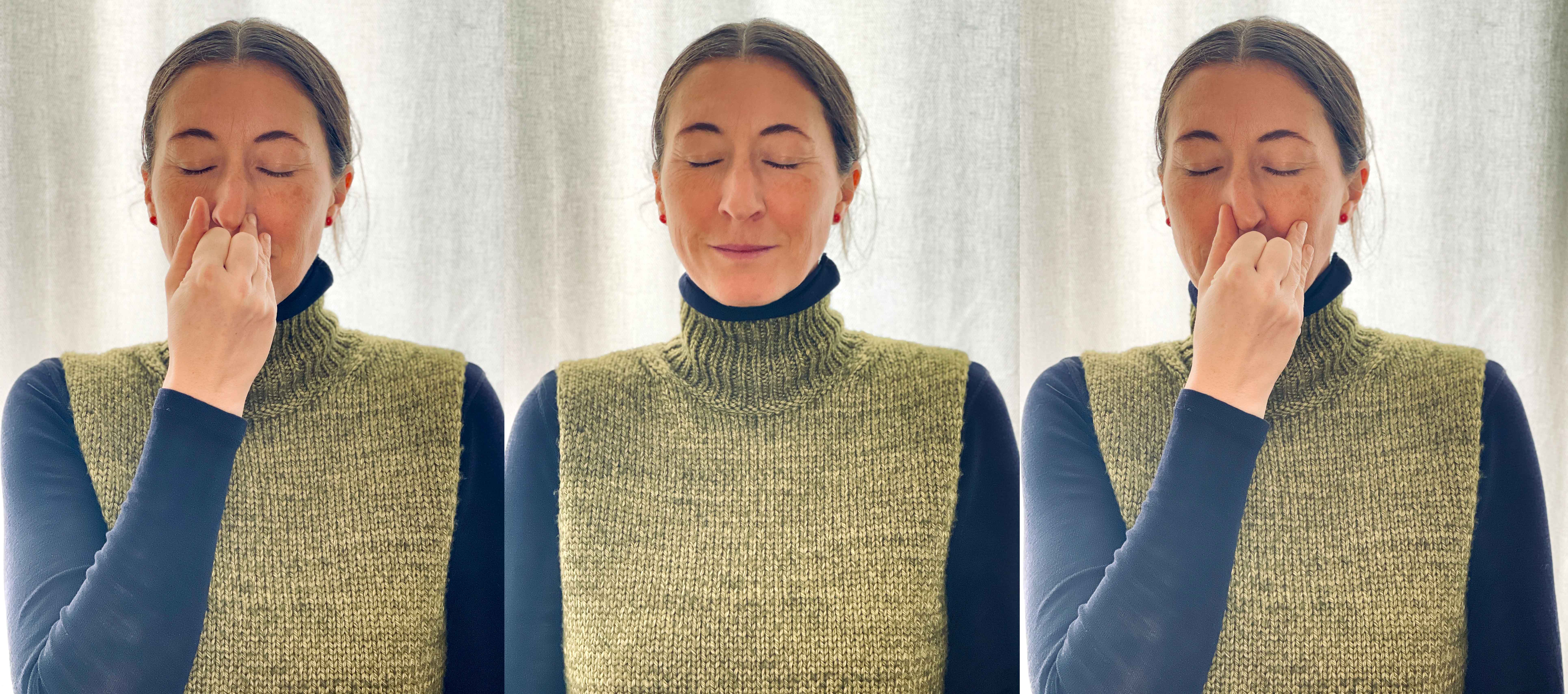
The breath constantly alternates
Our breath follows its own quiet rhythm: sometimes we breathe more through the right nostril, sometimes through the left – helping to bring our system into balance. Here’s what this natural alternation reveals about us and how you can consciously use it.
Alternate nostril breathing and our quiet inner rhythm
You may have noticed it before:
Sometimes the breath flows more freely through the right nostril, sometimes through the left. Without drawing attention to itself, the body switches sides throughout the day, following a natural rhythm that unfolds in the background without conscious control. The purpose of this phenomenon, known as the nasal cycle and regulated by the hypothalamus in the brain, has not yet been fully researched. It is assumed, however, that it supports, among other things, the recovery of the nasal mucosa.
This alternation is guided by the gentle swelling and releasing of the nasal turbinates. For most people, this happens regularly, roughly every thirty minutes to four hours. A subtle interplay that reveals how alive and rhythmically organised our body truly is.
There is also an interesting connection to the brain. When the left nostril is more active, the right hemisphere receives increased blood flow. This side is associated with creativity, intuition and emotion. When the right nostril is open, the left hemisphere dominates, which is responsible for logic, structure and language.
In the yogic practice of Pranayama, this natural alternation is used consciously, for example through alternate nostril breathing known as Nadi Shodhana. It balances the two hemispheres, regulates the nervous system and brings the body into a state of calm and clarity.
This breathing practice creates balance inside and out.
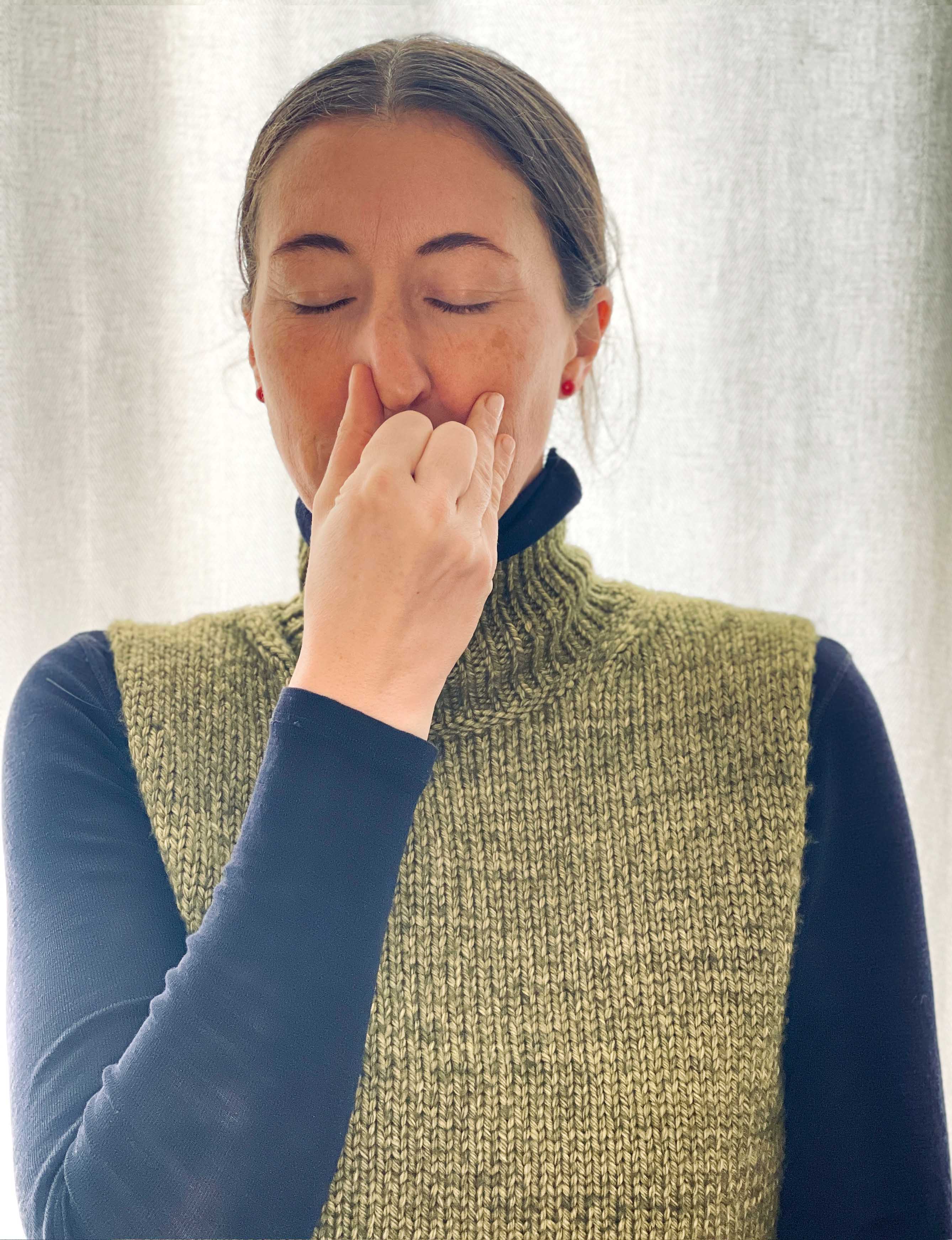
PREPARATION FOR NADI SHODANA - A simple exercise
• Sit upright and comfortably. Keep the spine long, chin slightly lowered. Relax shoulders, face and jaw. Close your eyes and
notice your natural breath.
• Take a few full mindful inhalations and exhalations.
• Close the right nostril using your right hand. Gently block the right nostril from the side or below with your thumb or ring
finger.
• Inhale through the left nostril. Close the left nostril with the ring finger of the same hand and exhale through the right nostril.
• Inhale through the right nostril, close it, and exhale through the left.
• Repeat this cycle for several minutes.
• If comfortable, pause briefly after each inhalation and exhalation.
• Keep inhalations and exhalations equal in length, about four seconds each.
• Always finish the exercise with an exhalation through the left nostril and take a moment to observe.
• Ask yourself how your breath flows now. How does your body feel, your mind, your inner state?
This subtle alternating movement reminds us that everything within us moves in waves:
Activity and rest, giving and receiving, thinking and feeling.
To breathe is to connect with life, with yourself and with the spaces that surround you.